Hyrox without quitting your lift program
Train for Hyrox without sacrificing strength. Discover why most plans fail strength athletes and get a 16-week template to balance lifts, runs, and stations. Optimise your Hyrox journey.
In this article
The Hyrox race is a beast. It demands a brutal blend of strength, endurance, and mental fortitude. Eight 1km runs, interspersed with eight functional workout stations – it's a unique challenge that has swept the global fitness scene. But here’s the rub: many strength athletes, accustomed to pushing heavy iron, find themselves at a crossroads. How do you train for a race that requires a significant running base and high-volume functional work, without watching your squat and deadlift numbers plummet?
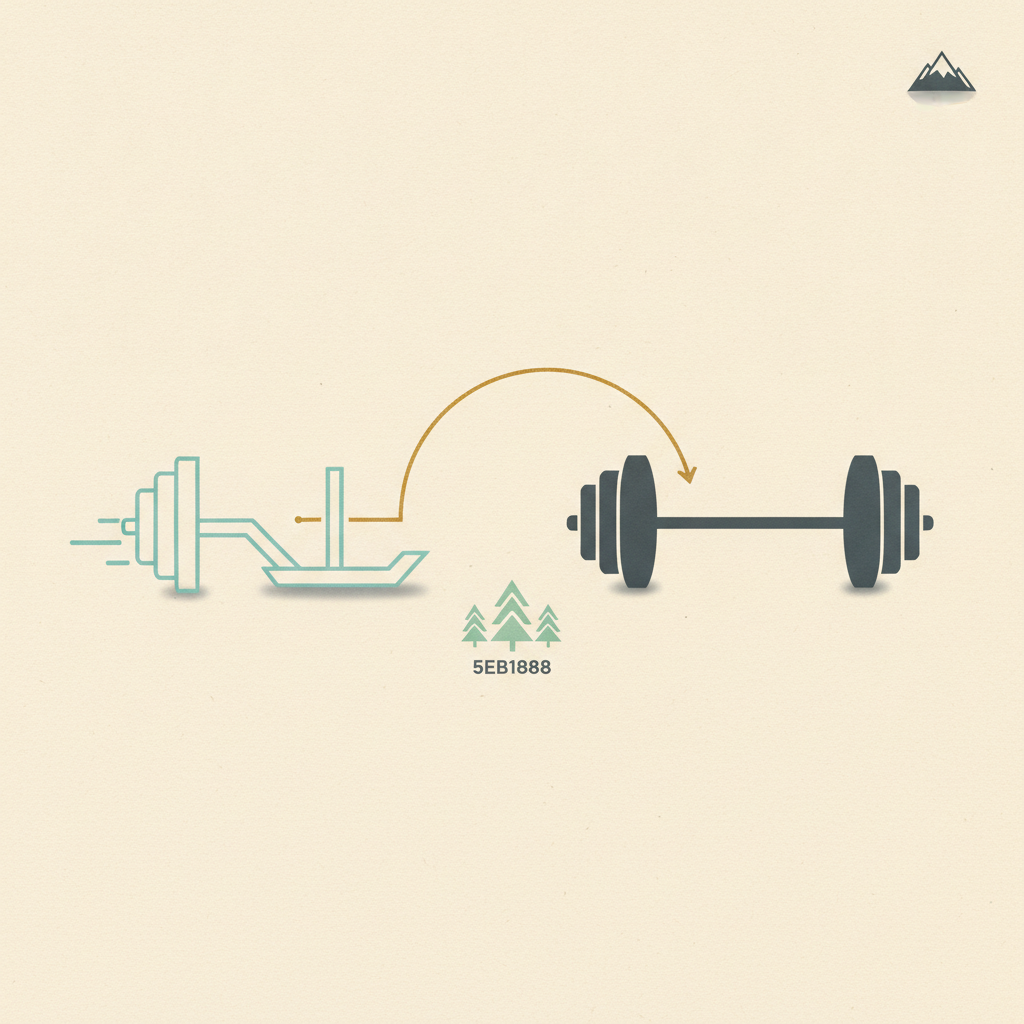
This isn't just about finishing; it's about *performing*. It's about conquering the mountain of Hyrox without abandoning the strength you've built. We're here to tell you that you don't have to choose. You can ascend to your Hyrox peak *and* keep your strength moving forward.
The Hyrox Dilemma: Why Most Plans Gut Your Strength
Most generic Hyrox training plans operate under a straightforward principle: specificity. To get good at running, you run. To get good at sled pushes, you push sleds. While fundamentally sound, this often leads to an imbalanced approach that prioritises endurance volume at the expense of strength development. The problem isn't the principle; it's the application.
Consider the physiological demands. A typical Hyrox plan will ramp up running mileage significantly. Couple this with repeated station practice – wall balls, burpee broad jumps, lunges – and your legs are under constant, high-volume stress. This consistent eccentric loading and metabolic fatigue create a significant recovery burden. When heavy strength training is added on top, without careful consideration, it becomes a recipe for overtraining, stalled progress, or even injury. Your central nervous system can only handle so much, and your muscles require adequate time to repair and adapt. This is where the dreaded 'interference effect' (Wilson et al., 2012) can rear its head, where the adaptations from endurance training can hinder strength gains if not programmed intelligently.
The result? Lifters find their maximal strength suffering. Their squat might feel heavy, their deadlift stalls, and the explosive power needed for stations like the sled push or farmers carry diminishes. The common advice often becomes, "Just accept it; you're training for Hyrox now." We argue that's a cop-out. Strength is not merely aesthetic; it's a foundational quality that underpins power, resilience, and injury prevention – all critical for Hyrox success.
A Smarter Approach: Integrating Strength and Endurance
It’s time for an opinionated take: you absolutely *can* improve your Hyrox performance while simultaneously getting stronger. The key lies in intelligent programming, strategic periodisation, and, critically, superior fatigue management. This isn't about doing 'everything'; it's about doing the *right things* at the *right time*.
The Ascend Advantage: Monitoring Your True Fatigue
This is where Ascend Fitness changes the game. Our gamified app maps your workouts, nutrition, water intake, and steps to elevation on a real mountain. But more than just tracking, Ascend's anatomy heatmap provides invaluable insights. For Hyrox athletes, this means visually surfacing your muscle fatigue, particularly in those crucial leg muscles that bear the brunt of both running and lifting.
Imagine knowing, with objective data, that your quads are at 80% fatigue from yesterday's heavy squat session and a long run. This insight allows you to adjust today's training – perhaps opt for an upper body strength day, or modify a scheduled run to a low-impact cycle. This proactive fatigue management prevents the cumulative burnout that destroys strength gains and leads to sub-par race day performance. Ascend isn't just about reaching the summit; it's about guiding you there efficiently, ensuring you don't burn out halfway up the mountain.
16-Week Hyrox Template: Strength, Run, and Stations
This template is designed to keep your core lifts moving forward while building your Hyrox-specific endurance and strength. It's a high-level overview, requiring adaptation based on individual recovery and fitness levels, but it illustrates the balance.
Key Principles:
* Prioritise Recovery: Nutrition, hydration (tracked easily with Ascend!), and sleep are non-negotiable. * Smart Concurrent Training: Schedule strength and endurance sessions with adequate recovery between them. Avoid heavy leg days immediately before or after high-volume running. * Periodisation: Vary intensity and volume over the 16 weeks, with planned deloads. * Specificity in Stations: Practice the movements, but focus on technique and efficiency rather than just brute force.
Weekly Structure (Example):
* Day 1: Heavy Lower Body Strength: Squats, Deadlifts (or variations), accessory work. *Focus on maintaining 80-90% 1RM work.* (e.g., 3-5 sets of 3-5 reps). * Day 2: Tempo Run / Intervals: 30-45 minutes. Focus on controlled pace work or shorter, intense bursts. * Day 3: Upper Body Strength & Core: Bench Press, Overhead Press, rows, pull-ups, core work. * Day 4: Hyrox Station Practice: Focus on 2-3 stations, combining them with short runs (e.g., 1km run, sled push, 1km run, wall balls). * Day 5: Long Slow Distance (LSD) Run: 60-90 minutes at a conversational pace. * Day 6: Active Recovery / Light Strength: Mobility, light cardio, or a lighter lower body session with more volume and less intensity. * Day 7: Rest.
This structure ensures consistent exposure to heavy lifting, varied running stimuli, and specific station practice, all while allowing for sufficient recovery. The goal is progressive overload in both strength and endurance domains, without one cannibalising the other.
Hyrox Training Plans: An Honest Comparison
When you look at the landscape of Hyrox training, several common approaches emerge. Here's how they stack up against the Ascend-inspired, strength-integrated method:
| Training Plan Approach | Strength Focus | Running Volume | Station Integration | Recovery Emphasis | Personalisation | Key Differentiator |
|---|---|---|---|---|---|---|
| ROXFIT | Moderate | High | High | Moderate | Moderate | Race-specific conditioning |
| ChAIron | Low-Moderate | High | High | Low-Moderate | Low | High-volume, grinder mentality |
| Edge | Moderate | Moderate-High | Moderate | Moderate | High | Data-driven, but often prioritises endurance |
| Ascend-Integrated | High | Moderate-High | High | High | High (via heatmap) | Optimised strength + endurance with real-time fatigue insight |
Final Ascent: Your Strongest Hyrox Yet
Training for Hyrox doesn't have to mean relinquishing your strength gains. With an intelligent, balanced programme and the unparalleled insights from Ascend Fitness's anatomy heatmap, you can prepare for the ultimate fitness race while continuing to build a stronger, more resilient physique. Stop guessing about your recovery and start training smarter. Ascend is available globally on iOS and Android, ready to help you conquer your fitness mountains.
Start your journey to a stronger, faster Hyrox. Join the waitlist and experience the power of smart, gamified training.
References: Wilson, J. M., Marin, P. J., Rhea, M. R., Wilson, S. M., Loenneke, J. P., & Anderson, J. C. (2012). Concurrent Training: A Meta-Analysis Examining Interference of Aerobic and Resistance Exercises on Muscular Strength and Power. *Journal of Strength and Conditioning Research*, *26*(8), 2293–2307.
FAQ
Common questions
Will training for Hyrox kill my strength gains?
It does on most generic plans because they prioritise endurance volume and constant eccentric leg loading, leaving no recovery for heavy lifting. Keeping a small dose of heavy, low-volume strength work in the plan lets you build the Hyrox base without losing your squat and deadlift.
How long should a Hyrox training block be for a strength athlete?
A block of around 16 weeks gives enough time to build the running and station base while preserving strength, by ramping race-specific volume gradually instead of all at once. The goal is to peak for the race without detraining the strength you've built.

Sam Wilson
Founder of Ascend Fitness. Building a gamified fitness tracker from Christchurch, NZ. Lifts, runs, and writes about both.
Start the climb
Turn today's read into tomorrow's first log.
Ascend Fitness is in private beta. Join the waitlist, early climbers jump the TestFlight queue and get a heads-up the day it drops.